Tire repair or replacement: How to know what your tire needs
A flat tire, a slow leak, or a visible cut on the sidewall can catch you off guard at the worst possible moment. When that happens, the first question most drivers ask is: can this tire be repaired, or does it need to be replaced?
It is not always obvious. Not every tire puncture qualifies for a safe tire repair, and driving on a compromised tire, even for a short distance, can turn a manageable situation into a serious safety risk. Making the right call starts with understanding what kind of damage you are dealing with and getting a professional inspection before making any decisions.
Can a damaged tire be repaired?
A damaged tire can often be repaired if the puncture is small, located within the tread area, and has not affected the internal structure or sidewall. However, the only way to confirm whether a repair is safe is to dismount the tire and inspect it from the inside. Visual checks from the outside are not enough. A tire is generally a candidate for repair when:
The puncture is located within the central tread area
The diameter of the puncture is small (typically no larger than 1/4 inch)
The internal structure has not been compromised
There is no sidewall damage
The tire still has adequate tread depth remaining
If any of these conditions are not met, tire replacement is the safer and more responsible choice.
When is tire repair the right option?
1
Small puncture in the tread area
A nail or screw embedded in the tread is one of the most common causes of a flat tire, and in many cases, it is also one of the most straightforward to fix. If the object is small, located within the central portion of the tread, and has not been driven on for an extended distance while flat, a professional flat tire repair is usually possible.
The size and exact location of the puncture must always be evaluated before any repair is attempted. A puncture too close to the shoulder of the tire may not be safely repairable, even if it appears minor from the outside.
2
Slow tire leak
A tire that keeps losing pressure without an obvious cause is worth taking seriously. A slow tire leak can result from:
- A small puncture that is difficult to see
- A faulty or damaged valve stem
- A poor seal between the tire and the rim
- Corrosion or damage on the rim surface itself
Adding air repeatedly is not a solution. It masks the symptom without addressing the underlying cause, and the leak will continue, or worsen, over time. A tire leak repair requires identifying and fixing the actual source of the pressure loss.
3
Tire with adequate tread depth
Tire tread depth plays an important role in the repair-or-replace decision. In the United States, the legal minimum tread depth is 2/32 of an inch, but most safety organizations recommend replacing tires at 4/32 of an inch, particularly in wet conditions.
If a tire is already approaching the end of its usable life, repairing a puncture is not a cost-effective or safe choice. The tread depth and overall condition of the tire should always factor into the final recommendation.
When should a tire be replaced instead of repaired?
Sidewall or shoulder damage
Tire sidewall damage is one of the clearest indicators that a tire needs to be replaced, not repaired. The sidewall flexes continuously as the tire rolls, which means any puncture, cut, or crack in that area is subject to constant stress. Repairing sidewall damage does not restore the structural integrity of the tire, and a failure in that zone can happen without warning.
Large or irregular punctures
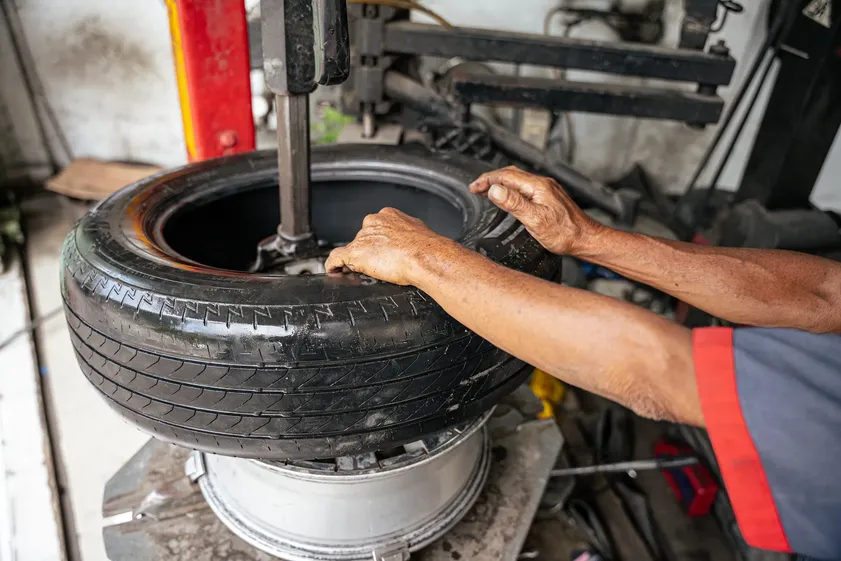
Not all punctures are created equal. A clean, small hole from a nail is very different from the damage caused by a large bolt, a jagged piece of metal, or a sharp curb impact. Large or irregular punctures can weaken the internal cords and belts of the tire in ways that are not always visible from the outside, which is why a proper dismount and internal inspection matters so much.
Bulges, bubbles or exposed cords
A bulge or bubble on the sidewall or tread surface indicates that the internal structure of the tire has already been damaged. This type of failure is not repairable. Stop driving on the tire immediately if you notice:
- Any visible bulge or deformation
- Exposed steel cords or fabric
- Tread separation
- Deep cuts that penetrate through the rubber
- Pronounced cracking across the sidewall or tread
Excessive or uneven tread wear
Uneven tire wear is a sign that something else in the vehicle needs attention. It can result from:
Wheels that are out of alignment
Incorrect tire pressure over an extended period
Lack of regular tire rotation
Worn suspension or steering components
A tire with severe or uneven wear should be replaced rather than repaired, and the underlying cause should be corrected at the same time to prevent the same pattern from developing on the new tire.
Multiple previous repairs
A tire that has already been repaired more than once, or that has repairs located close together, may not be a safe candidate for another fix. The number, proximity, and location of prior repairs all factor into whether an additional repair is structurally sound. A professional tire inspection will take repair history into account as part of the overall evaluation.
Tire patch vs. tire plug: what is the difference?
These two methods are often confused, but they are not the same thing, and they are not equally reliable.
- A tire plug fills the puncture channel from the outside without dismounting the tire. It is considered a temporary measure, not a permanent repair.
- A tire patch is applied to the inner liner of the tire after it has been dismounted and inspected. It covers the damaged area from the inside and provides a more durable seal.
- A patch-plug combination is the method recommended by most tire manufacturers and safety organizations. It addresses both the puncture channel and the inner liner in a single repair.
Any proper tire patch service requires dismounting the tire first. Repairs performed from the outside only, without an internal inspection, cannot confirm whether the structure is intact and should not be treated as a permanent solution.
Is it safe to drive with a damaged tire?
In most cases, no. Driving on a tire that has lost pressure, sustained visible damage, or is showing signs of structural failure puts you and everyone around you at risk. The potential consequences include:
- Sudden and rapid pressure loss while driving
- Reduced vehicle stability, particularly at highway speeds
- Longer stopping distances
- Rim damage from contact with the road surface
- Accelerated wear on the damaged tire and surrounding tires
- A blowout, which can cause loss of vehicle control
If your tire is losing pressure quickly, has a visible bulge, or is causing unusual vibrations, pull over safely as soon as possible. Do not attempt to drive to a shop on a tire that is visibly failing.
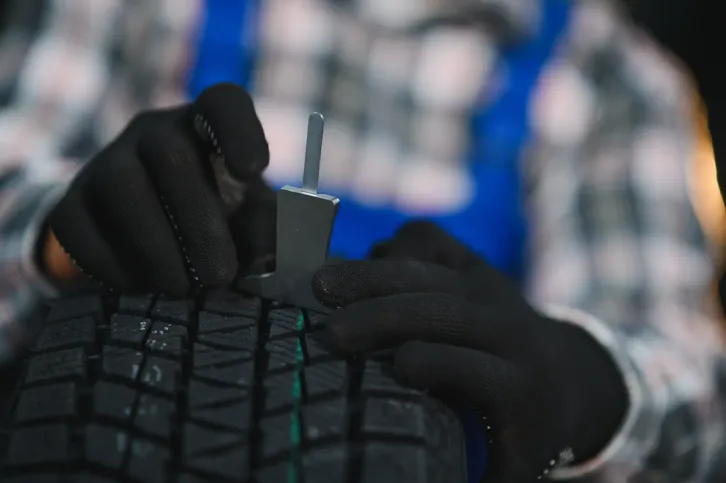
How a professional tire inspection is performed
A proper tire inspection at R&A AutoWorks follows a clear and thorough process:
Tire pressure check to assess current inflation and rate of pressure loss
Exterior visual inspection of the tread, sidewall, and shoulder for cuts, bulges, or embedded objects
Leak source identification using water submersion or leak detection solution
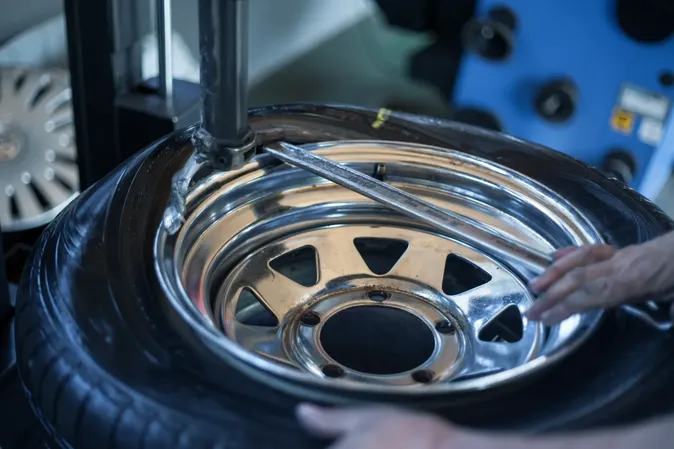
Tire dismounting to access and inspect the inner liner
Internal structure evaluation for cord damage, separation, or signs of impact
Puncture measurement to confirm size and location against repair guidelines
Tread depth measurement to assess remaining usable life*
Repair or replacement recommendation based on all findings
Final pressure check and seal verification before returning the tire to service
*Tires must meet the legal minimum of 2/32 of an inch required in most U.S. states, and if they still perform safely above the recommended replacement threshold of 4/32 of an inch.
At R&A AutoWorks, we give every tire the inspection it deserves before recommending any course of action. Here is what you can expect:
- Professional tire inspection that goes beyond a quick visual check
- Accurate leak detection to find the exact source of pressure loss
- Safe puncture repairs when the damage meets professional repair standards
- Honest recommendations on whether repair or tire replacement is the right choice for your specific situation
- Rotation and alignment services to extend the life of your tires and prevent uneven wear
- Service for cars, SUVs, trucks, and commercial vehicles
- Experience with American, Asian, and European vehicles
- Bilingual service in English and Spanish, because clear communication is part of the job
Schedule your tire inspection today
A timely inspection can make the difference between a simple, affordable repair and a full tire replacement. It can also protect your rim from damage that occurs when a tire runs flat for too long, and it gives you the information you need to make a safe, informed decision.