Why Is My Check Engine Light On? Common Causes and When You Need an Engine Diagnostic Service
That little amber light on your dashboard can feel like a punch to the gut, especially when you have no idea what triggered it. The good news is that your car is not broken down yet; it is simply trying to tell you something. Understanding what your check engine light means, and knowing when to act on it, can save you from a much bigger and more expensive problem down the road.
What Does the Check Engine Light Mean?
The check engine light, also called the engine warning light, is part of your vehicle’s onboard diagnostic system (OBD). It activates when the system detects a malfunction in one or more components that affect engine performance, emissions, or safety.
Your check engine light can be triggered by issues across multiple systems, including:
The fuel and emissions system
The ignition system
The exhaust system
Sensors related to airflow, oxygen, and temperature
The transmission (in some vehicles)
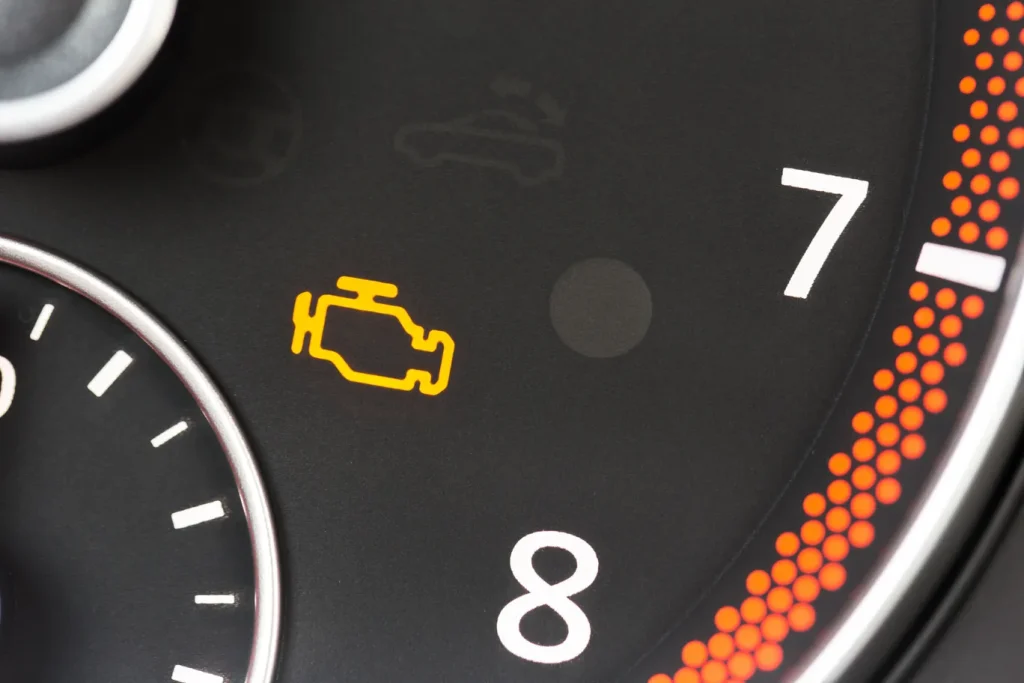
Solid light vs. flashing light: what's the difference?
This distinction matters more than most drivers realize. Solid check engine light: the issue is present but not immediately critical. You can typically drive to a shop, but you should not ignore it.
Flashing check engine light: this signals an active and serious problem, such as an engine misfire, that can cause significant damage if you keep driving. Pull over safely and call for assistance.
The Most Common Reasons Your Check Engine Light Turns On
One of the simplest and most overlooked causes. A loose, cracked, or missing gas cap allows fuel vapors to escape, which triggers the evaporative emissions system and turns on the light. Tighten or replace the cap and the light may clear on its own after a few drive cycles.
The oxygen sensor monitors how much unburned oxygen is in the exhaust and helps regulate the air-fuel mixture. A faulty sensor affects fuel economy and can cause damage to the catalytic converter over time if left unaddressed.
Spark plugs ignite the air-fuel mixture in the combustion chamber. When they wear out, the engine misfires, loses power, and burns more fuel. Replacing spark plugs on schedule is one of the most cost-effective ways to protect your engine.
The catalytic converter reduces harmful emissions. It typically fails because of other ignored problems, like a bad oxygen sensor or worn spark plugs. Replacing a catalytic converter is one of the more expensive repairs, which makes early engine diagnostics especially valuable.
The mass air flow (MAF) sensor measures the amount of air entering the engine so the computer can calculate the right fuel amount. A dirty or failing MAF sensor leads to poor engine performance, rough idling, and reduced fuel efficiency.
An engine misfire occurs when one or more cylinders fail to fire correctly. It can feel like a jerk or stumble during acceleration. Misfires can be caused by bad spark plugs, a failing ignition coil, fuel injector problems, or low compression, and they should be diagnosed promptly.
Can You Keep Driving with the Check Engine Light On?
If the light is solid, the car is driving normally, and there are no unusual sounds, smells, or performance changes, you can usually drive to a nearby shop for a vehicle inspection without too much risk. Do not put it off for days or weeks.
When you should stop the vehicle immediately:
- The check engine light is flashing
- You notice a loss of engine power
- You smell burning or see smoke
- The temperature gauge is rising abnormally
- Other dashboard warning lights appear alongside it
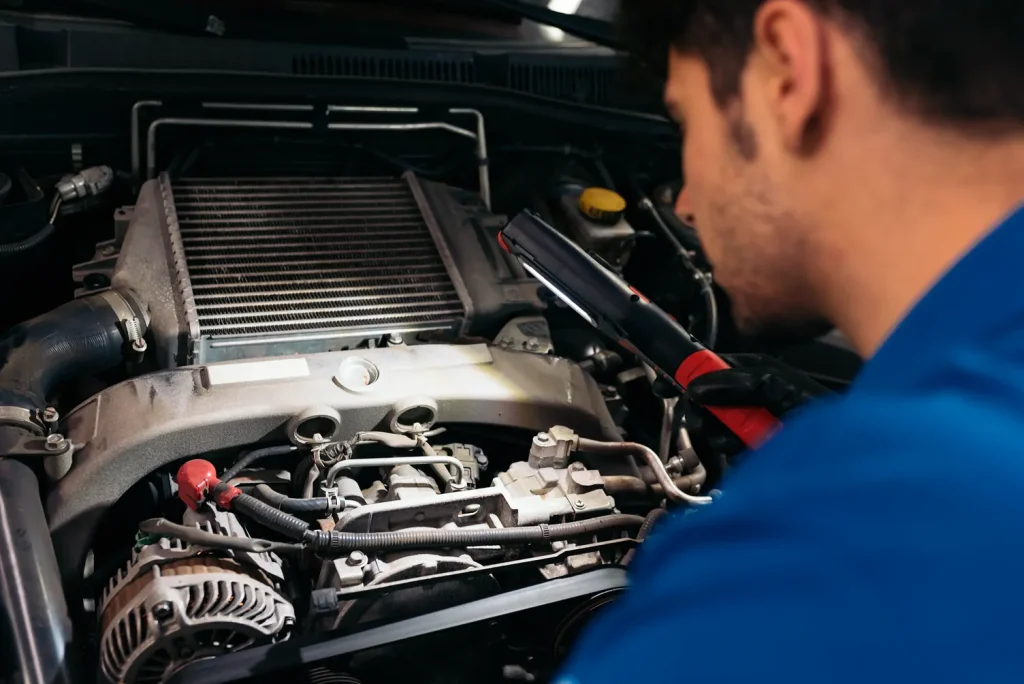
Risks of ignoring the warning
Ignoring the check engine light is one of the most common and costly mistakes drivers make. What starts as a $150 sensor replacement can turn into a $2,000 catalytic converter job or worse, an engine rebuild, simply because the warning was ignored for too long.

How an Engine Diagnostic Service Identifies the Problem
A professional engine diagnostic service is not just about plugging in a device and reading a number. It is a structured process that gives technicians a clear and accurate picture of what is happening inside your vehicle.
1
OBD-II scanner connection
The technician connects an OBD scanner to the vehicle’s diagnostic port, usually located under the dashboard. This retrieves the fault codes that the car’s computer has stored.
2
Reading fault codes
Each code points to a specific system or component. For example, a P0420 code indicates a catalytic converter efficiency issue. These codes are a starting point, not a final answer.
3
Physical inspection
A good engine diagnostic always includes a hands-on look at the relevant components, hoses, connections, and sensors. Some problems do not show up in codes but are visible on inspection.
4
Diagnosis confirmation
The technician cross-references the codes with the physical inspection and live data from the vehicle to confirm the actual cause, not just the symptom.
5
Repair recommendations
Once the root cause is identified, the technician provides a clear explanation and a repair plan, with no unnecessary upsells.
There are plenty of shops that can plug in a scanner. What sets R&A AutoWorks apart is what happens after that.
- Certified technicians with experience across domestic and imported vehicles
- Modern diagnostic equipment that goes beyond basic OBD scanning
- Accurate diagnostics that identify the root cause, not just the code
- Honest communication in English and Spanish, so you always understand what is happening with your vehicle
- Service for both gasoline and diesel engines, because we work on a wide range of vehicles
Schedule Your Engine Diagnostic Today
The check engine light is your car asking for help. The sooner you respond, the more options you have and the less it is likely to cost. A preventive engine diagnostic can catch small issues before they become serious failures, keep your vehicle running efficiently, and give you peace of mind on every drive. Do not wait until the problem gets worse. Contact R&A AutoWorks today to schedule your engine diagnostic service and get back on the road with confidence.