7 Signs Your Brakes Need Immediate Service
Your brakes are the single most important safety system in your vehicle. They are the difference between stopping in time and not stopping at all. And yet, brake maintenance is one of the things drivers most commonly put off, usually because the warning signs start small and easy to ignore. The truth is that brakes do not fail all at once. They give you signals, and knowing how to read those signals can protect you, your passengers, and everyone else on the road.
Why Brake Maintenance Is So Important?
Your braking system is made up of several components working together:
Brake pads
Brake rotors
Calipers
Brake lines
Brake fluid
When all of them are in good condition, your vehicle stops reliably and predictably. When even one component starts to fail, the entire system is compromised. Brake maintenance is not just about comfort or performance. It is directly tied to your safety and the safety of others. A vehicle that cannot stop quickly and consistently is a serious hazard, regardless of how carefully you drive.
Ignoring brake maintenance also tends to be expensive. What starts as a simple brake pad replacement can turn into rotor damage, caliper failure, or brake line issues if left unaddressed. The longer the problem is ignored, the more it costs to fix.
7 Warning Signs Your Brakes Need Attention
1
Squeaking or Squealing Noises
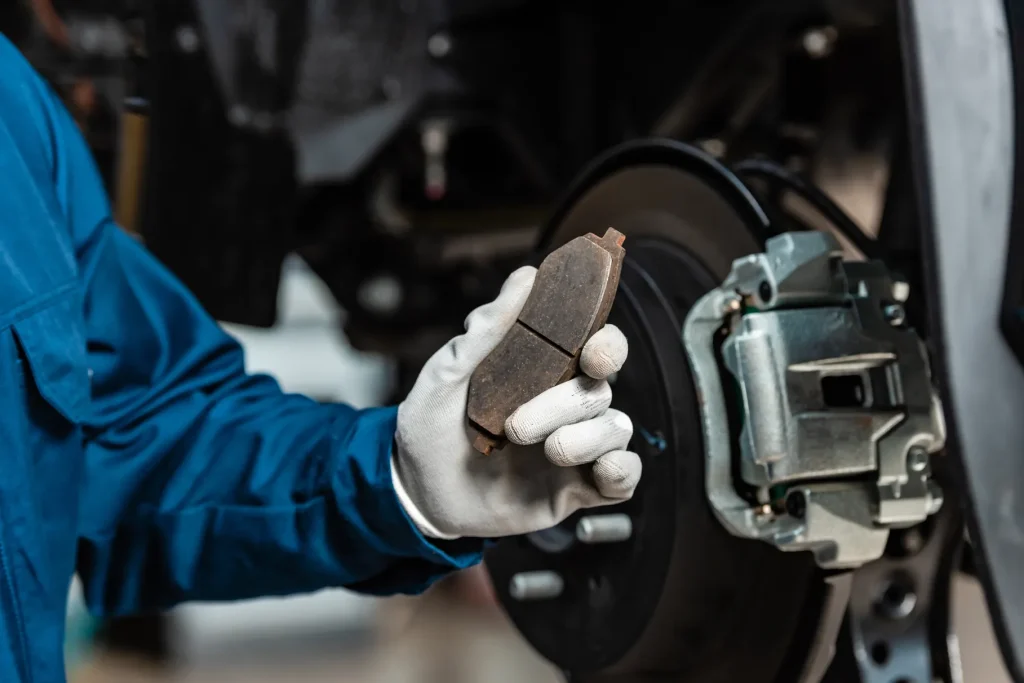
Most brake pads are designed with a small metal wear indicator that produces a high-pitched squeal when the pad material gets too thin. Do not wait for it to get louder.
2
Grinding Sounds
If squealing has progressed to a grinding or metal-on-metal sound, the brake pads are likely worn down completely. At this point, the metal backing of the pad is making direct contact with the brake rotorsIt may involve rotor resurfacing or full rotor replacement.
3
Vibrations When Braking
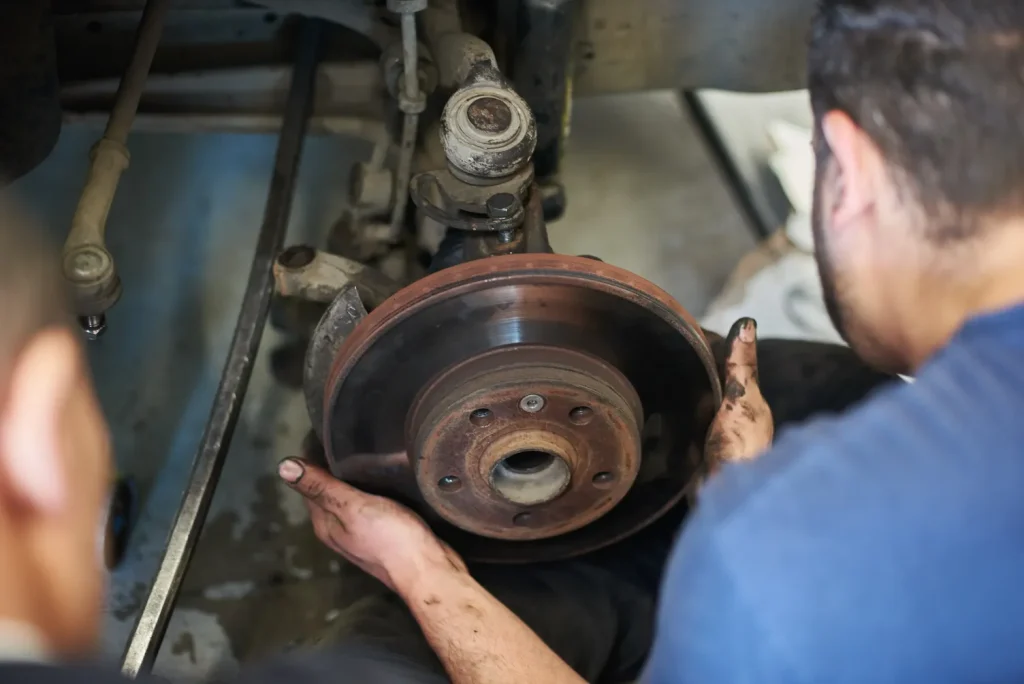
Rotors can warp from excessive heat, prolonged heavy braking, or simply from age and wear. Warped rotors reduce the effectiveness of your braking system and should be inspected as soon as possible.
4
Soft or Spongy Brake Pedal
A brake pedal that feels soft, spongy, or sinks closer to the floor than usual is a serious warning sign. A spongy pedal means your braking system is not operating at full hydraulic pressure, which directly affects stopping power.
5
Vehicle Pulls to One Side
If your vehicle drifts or pulls to one side when you apply the brakes, it could mean that one brake caliper is sticking, that brake pads are wearing unevenly, or that there is a problem with the brake fluid in one of the lines.
6
Brake Warning Light Is On
Most modern vehicles have a dedicated brake warning light on the dashboard. If it turns on, do not dismiss it. It could indicate low brake fluid, a sensor detecting worn brake pads, or a more serious issue
7
Longer Stopping Distance
If you notice that your vehicle takes longer to stop than it used to, or that you are pressing the pedal harder than normal to slow down, your brakes are losing effectiveness.
What Happens If You Ignore Brake Problems?
Putting off brake repair is one of the riskier decisions a driver can make. Here is what tends to happen when warning signs are ignored:
- Accelerated wear: once brake pads wear through, rotors and calipers take the damage directly, which increases the scope and cost of the repair significantly.
- Expensive repairs: a brake pad replacement that might cost a few hundred dollars can turn into a full brake system overhaul if rotors and calipers are damaged.
- Accident risk: degraded braking performance means longer stopping distances and less control, particularly in emergency situations or wet road conditions.
- Rotor and caliper damage: metal-on-metal contact destroys rotors quickly and can cause calipers to seize, which adds substantially to the repair bill and the safety risk.
What Does a Professional Brake Service Include?
A thorough brake service at R&A AutoWorks is not limited to swapping out parts. It is a complete evaluation of your braking system.
Full brake inspection: a visual and functional check of every component in the braking system, from pads and rotors to calipers and brake lines.
Brake pad evaluation: measuring pad thickness to determine whether brake pad replacement is needed now or approaching soon.
Rotor assessment: checking brake rotors for warping, scoring, or thickness below the safe minimum.
Brake fluid check: testing the condition and level of brake fluid, since degraded fluid absorbs moisture and reduces hydraulic effectiveness.
System performance test: a final test to confirm that the braking system is responding correctly and consistently before the vehicle leaves the shop.
- Certified technicians with hands-on experience across a wide range of domestic and imported vehicles
- Precise diagnosis that identifies the actual cause of the problem, not just the symptom
- Quality parts including reliable brake pads, rotors, and hardware that meet or exceed manufacturer specifications
- Fast turnaround because we know you need your vehicle back on the road safely and without unnecessary delays
- Personalized attention in English and Spanish, so you always know exactly what is being done and why
Schedule Your Brake Inspection Today
Do not wait for a close call to take your brakes seriously. If you have noticed any of the warning signs described above, or if you simply cannot remember the last time your brakes were inspected, now is the right time to act. We also recommend scheduling a brake inspection before any long road trip, at the start of the rainy season, or any time your vehicle feels different when slowing down. Preventive maintenance is always less expensive than emergency repair.
Contact R&A AutoWorks today to schedule your brake service and drive with the confidence that comes from knowing your vehicle can stop when it needs to.