Why Is My Car AC Not Blowing Cold Air? Common Causes and Solutions
Few things are more frustrating than turning on your car’s air conditioning on a hot Texas afternoon and getting nothing but warm air in return. Whether the air is slightly less cold than it used to be or the system has stopped working altogether, something in your AC system needs attention. The good news is that most car AC problems have a clear cause and a straightforward solution. At R&A AutoWorks, we help Texas drivers diagnose and fix air conditioning issues quickly, so you can get back to driving in comfort.
Why Your Car's Air Conditioning Matters?
A working air conditioning system is not a luxury in Texas. It is a necessity. During the summer months, interior temperatures in a parked vehicle can exceed 130°F within minutes. Even while driving, an AC system that is not functioning properly makes the cabin uncomfortable and can affect your focus behind the wheel, particularly during long commutes or highway drives.
Beyond cabin comfort, a properly maintained AC system also helps defog your windshield faster, reduces humidity inside the vehicle, and filters airborne particles through the cabin air filter. When the system fails, all of those benefits disappear at once.
Texas heat also puts a higher demand on AC components than in cooler climates. That means wear and tear happen faster, and skipping auto air conditioning service can lead to bigger problems than it would elsewhere.

Common Reasons Your Car AC Stops Blowing Cold Air
Refrigerant is the substance that makes cold air possible. It cycles through the AC system, absorbing heat from the cabin and releasing it outside. When refrigerant levels drop, the system cannot produce cold air effectively. Low refrigerant is one of the most common causes of car AC not blowing cold air, and it almost always points to a leak somewhere in the system.
A refrigerant leak can occur in the hoses, fittings, the condenser, or the evaporator. Because refrigerant is a gas under pressure, even a small leak causes a noticeable drop in cooling performance over time. Leaks cannot be fixed by simply adding more refrigerant. The source of the leak must be identified and repaired first, otherwise the problem will return.
The compressor is the heart of the AC system. It pressurizes the refrigerant and circulates it through the system. When the compressor fails, the entire system stops working. Compressor failure can happen gradually, with the AC becoming less effective over time, or suddenly, with no cold air at all. A seized or failing compressor is one of the more significant AC repairs, which makes early diagnosis especially important.
The cabin air filter prevents dust, pollen, and debris from entering the vehicle through the ventilation system. When it becomes clogged, airflow is restricted, which reduces the cooling effect even when the AC system itself is working properly. Replacing a dirty cabin air filter is one of the simplest and most affordable fixes in car AC service.
The AC system relies on a network of relays, fuses, sensors, and switches to operate correctly. A blown fuse, a faulty relay, or a failed pressure switch can prevent the system from activating or cause it to shut off unexpectedly. Electrical issues require proper diagnostic tools to identify accurately.
The condenser sits at the front of the vehicle and releases heat from the refrigerant to the outside air. The evaporator sits inside the dashboard and absorbs heat from the cabin. Both components can be damaged by road debris, corrosion, or age. A damaged condenser or evaporator affects the entire cooling cycle and typically requires professional car AC repair to address.
Signs Your Air Conditioning Needs Professional Service
- Warm or lukewarm air: the most obvious sign that something is wrong with the refrigerant level or compressor
- Weak airflow: reduced air coming through the vents, even at the highest fan setting, often points to a clogged filter or blower motor issue
- Unpleasant odors: a musty or moldy smell from the vents usually indicates bacterial growth in the evaporator or a dirty cabin air filter
- Unusual noises: clicking, rattling, or squealing when the AC is on can indicate compressor problems or debris in the system
- Excess humidity inside the vehicle: if the AC is running but the cabin feels humid rather than cool and dry, the evaporator may not be draining properly
How a Professional AC Service Solves the Problem
A professional air conditioning service at R&A AutoWorks goes beyond simply recharging the system. It is a thorough evaluation designed to find and fix the actual cause of the problem.
1
System inspection: a complete visual and functional check of all AC components, including hoses, fittings, belts, and electrical connections
2
Leak detection: using specialized equipment to identify any refrigerant leaks before recharging the system
3
Refrigerant recharge: once leaks are repaired, the system is recharged to the manufacturer’s specified refrigerant level
4
Compressor evaluation: checking the compressor for proper operation, unusual noise, and correct pressure output
5
Performance test: a final test to confirm that the system is producing cold air at the correct temperature and that airflow is consistent throughout the cabin
When your AC stops working in the middle of a Texas summer, you need a shop that can find the problem fast and fix it right the first time.
- Certified technicians with experience diagnosing and repairing all types of automotive AC systems
- Accurate diagnosis using specialized equipment, so you are never paying to replace parts that do not need replacing
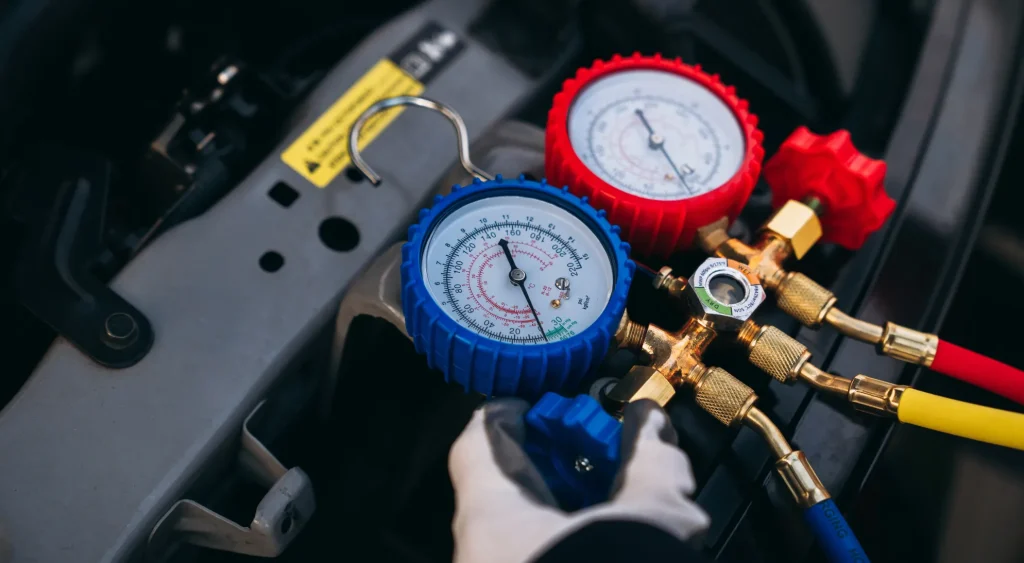
- Professional-grade tools for leak detection, refrigerant recovery, and system recharging
- Reliable repairs with quality parts that are built to handle the demands of Texas heat
- Fast service because we know that driving without AC in Texas is not just uncomfortable, it is genuinely unpleasant
We also communicate with our customers in both English and Spanish, because clear communication is part of good service.
Stay Cool, Schedule Your AC Service Today
The best time to service your car’s air conditioning is before it stops working. A preventive car AC service can catch low refrigerant levels, early compressor wear, or a clogged filter before they turn into a full system failure in the middle of summer.
If you are planning a road trip, heading into the hottest months of the year, or simply noticing that your AC is not as cold as it used to be, now is the right time to act. Contact R&A AutoWorks today to schedule your air conditioning service and make sure your vehicle is ready for whatever Texas summer throws at it.